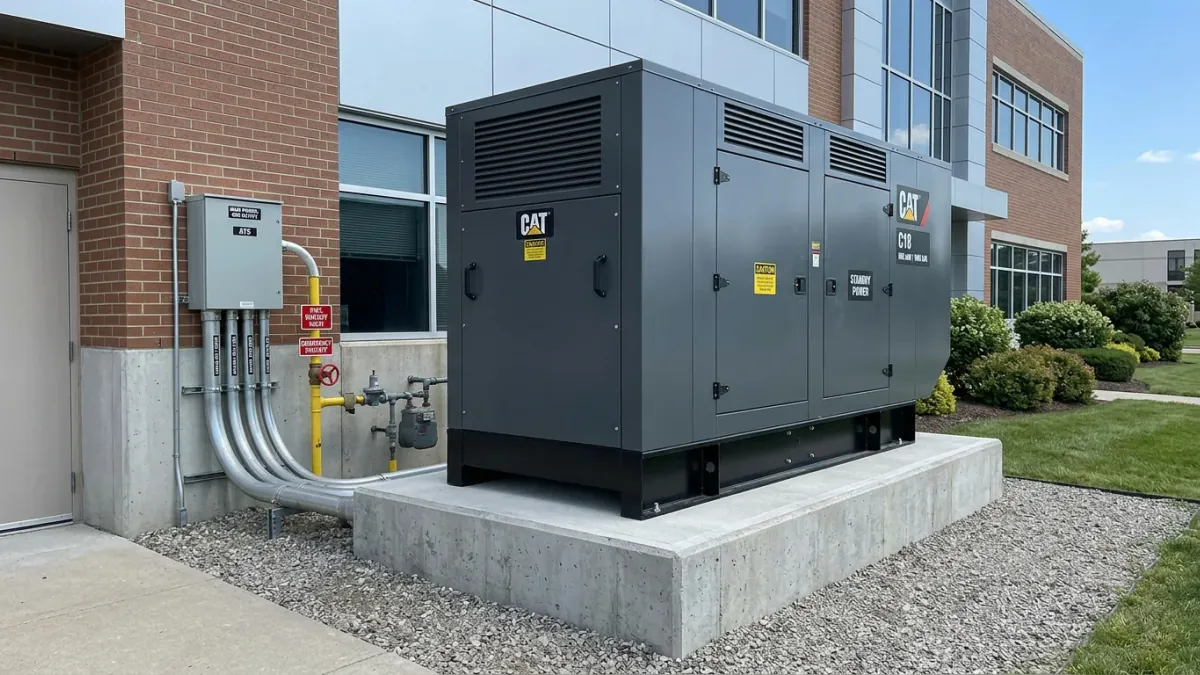
Stand By Generator Installation: Commercial Standby Generator Installation
Heavy-duty three-phase backup power generation engineered to maintain business continuity, commercial refrigeration, and mission-critical data systems during local power blackouts.
Unplanned utility outages cost commercial enterprises thousands of dollars in lost transaction revenue, spoiled refrigerated inventory, and disrupted workflow. Our commercial generator installations deploy high-capacity liquid-cooled systems designed for extended runtime across retail centers, medical clinics, and industrial facilities. Electricians integrate heavy-duty automatic transfer switches, configure advanced load-shedding modules, and ensure full compliance with National Electrical Code and NFPA 110 emergency power standards. We provide complete electrical coordination from utility transformer isolation to final municipal load bank testing.
Technical Engineering
Three-Phase Industrial Power Continuity & NFPA 110 Compliance
Commercial facilities operate high-voltage three-phase distribution systems driving commercial refrigeration, server rooms, and life-safety systems. Liquid-cooled industrial generators operate at 1,800 RPM for prolonged endurance, incorporating digital voltage regulators that maintain electrical harmonics below 5% Total Harmonic Distortion (THD) to shield sensitive computing infrastructure from electrical noise.
✓Custom 120/208V and 277/480V three-phase alternator configurations
✓NFPA 110 emergency and standby power compliance engineering
✓Heavy-duty liquid-cooled engines designed for sustained industrial duty
✓Automated multi-stage priority load-shedding control architecture
✓Full resistive load bank testing under maximum facility load before handover
Standard Installation Workflow
1
Switchgear Sizing
Analyzing three-phase transformer service and facility peak demand profiles.
2
Life-Safety Isolation
Separating emergency branch circuits to comply with NFPA emergency power standards.
3
Heavy Pad & Fuel Rigging
Pouring engineered structural concrete slabs and connecting industrial diesel or high-pressure gas feeds.
4
Load Bank Verification
Executing multi-hour resistive load banking to validate cooling performance and voltage regulation.
Commercial facilities generally require three-phase power at 120/208V or 277/480V to drive heavy industrial motors, chillers, and commercial kitchen machinery. Installing a three-phase generator requires matching the alternator configuration directly to the facility's existing utility transformer and switchgear topology.
Liquid-cooled commercial models utilize automotive-style radiator cooling systems and low-speed 1,800 RPM engines designed for indefinite runtime under heavy electrical loads. Air-cooled units spin at 3,600 RPM and are engineered primarily for intermittent residential duties rather than sustained industrial operations.
Commercial installations must adhere strictly to NFPA 110 (Emergency and Standby Power Systems), NFPA 70 (National Electrical Code), and local environmental sound level ordinances. Facilities housing medical refrigeration or public assembly areas must also satisfy life-safety branch separation standards.
Load-shed controllers automatically drop non-essential electrical circuits like decorative lighting or secondary HVAC zones if emergency power demand spikes near maximum alternator capacity. Prioritizing life-safety equipment and commercial walk-in freezers prevents generator breaker tripping during full-load operations.
Technicians mount commercial transfer switches directly between the main utility switchboard and the emergency distribution panelboard. Clearances must satisfy NEC working space requirements, maintaining at least three to four feet of unobstructed access in front of the switch enclosure.
Large commercial diesel units can be supplemented with bi-fuel natural gas systems, though dedicated diesel remains the industry standard for emergency facilities requiring on-site fuel autonomy. On-site diesel fuel tanks ensure the facility continues operating even if underground municipal gas lines suffer pressure drops.
Municipal commissioning requires a full resistive load bank test where the generator operates under 100% rated electrical load for two to four consecutive hours. Load banking burns off unburned fuel deposits, validates cooling performance, and proves that voltage regulation remains within tight operating tolerances.
Facilities managers must schedule quarterly fluid and battery inspections alongside annual oil, fuel filter, and coolant flushes. NFPA 110 standards also require monthly simulated operational runs under actual building load to verify switchgear transfer responsiveness.
Ready for Backup Power?
Commercial Standby Generator Installation
Speak with our electrical coordination team to discuss kilowatt sizing, transfer switch ratings, and current equipment availability.