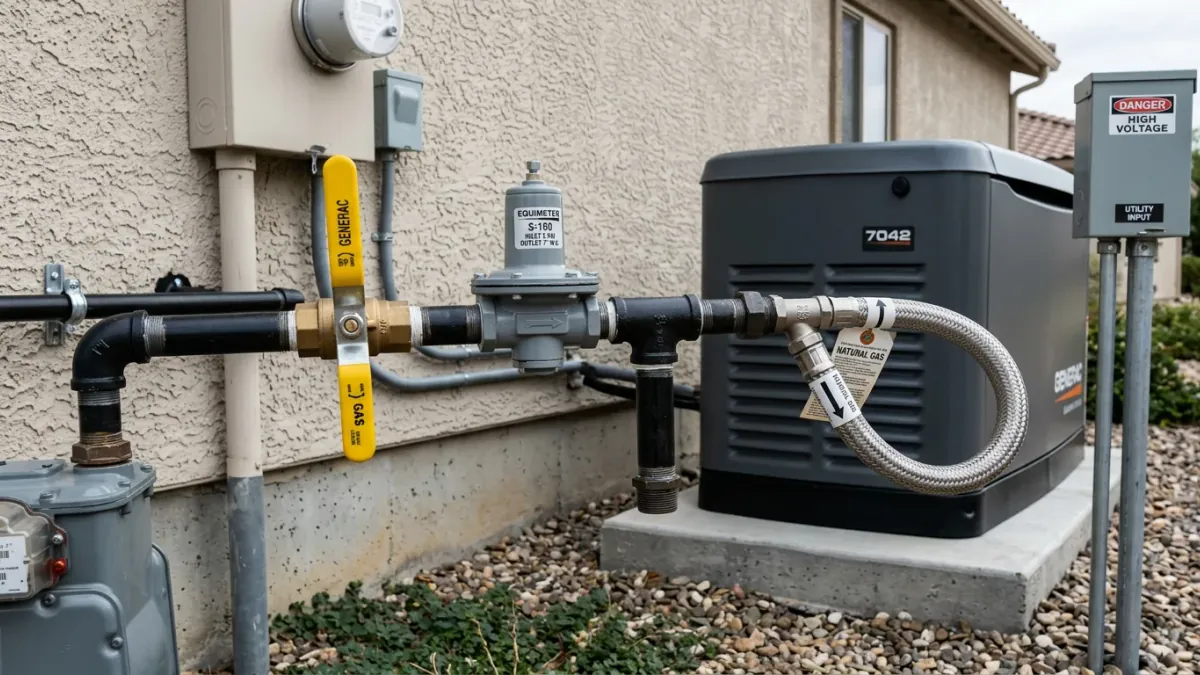
Stand By Generator Installation: Natural Gas & LP Fuel Line Hookup
Dedicated fuel line piping, pressure regulation, and emergency safety shutoff valves connecting standby generators to municipal natural gas or on-site liquid propane.
Supplying an uninterrupted stream of clean fuel is vital for maintaining steady generator engine RPM and stable electrical frequency. Technicians coordinate the installation of high-capacity natural gas supply piping or dedicated liquid propane regulator lines sized to meet the generator's full-load BTU consumption. Every hookup incorporates full-port exterior manual shutoff valves, sediment traps, and flexible stainless steel vibration-isolation connectors to protect fuel joints against mechanical resonance. Pressure testing and soap-bubble leak verifications ensure complete fire safety and regulatory compliance before system activation.
Technical Engineering
Fuel Volume Dynamics, Meter Capacity & Pressure Regulation
Supplying 250,000 to 350,000 BTUs per hour under full generator load demands proper pipe diameter calculations to prevent pressure dropouts. Undersized gas lines cause fuel starvation, RPM surging, and low electrical frequency output when central air conditioners or well pumps kick on.
✓Rigid black iron pipe sizing calculations for long exterior runs
✓Utility gas meter upgrades to 400-CFH or 600-CFH high-flow capacities
✓Pneumatic pressure decay testing and electronic manometer calibration
Standard Installation Workflow
1
BTU Flow Assessment
Calculating cumulative fuel demands for home heating, hot water, and generator load.
2
Gas Meter Verification
Inspecting municipal meter delivery capacity and requesting high-flow utility upgrades if needed.
3
Pipe Fitting & Sediment Traps
Installing heavy black iron line with full-port shutoff valves and flexible vibration loops.
4
Pressure Testing & Soap Checks
Pressurizing lines with air gauges to verify absolute gas tightness before opening valves.
Frequently Asked Questions Regarding Natural Gas & LP Fuel Line Hookup
A standard 22kW to 26kW residential standby generator requires approximately 250,000 to 330,000 BTUs per hour when running at full electrical load. Ensuring the existing gas meter and supply pipe can deliver this volume alongside home furnaces and water heaters is critical to avoid fuel starvation.
Standard residential gas meters are rated for roughly 250,000 total BTUs per hour, which is sufficient for basic household appliances but easily maxed out once a generator starts. Upgrading to a high-capacity 400-CFH or 600-CFH gas meter ensures consistent delivery pressure under full furnace and generator demand.
Gas pipe sizing depends directly on the distance between the gas meter and the generator inlet, typically demanding 1-inch to 1.25-inch black iron or corrugated stainless steel tubing. Undersized three-quarter-inch piping causes friction loss and severe pressure drops that cause the engine to stall under load.
Standby generators feature dual-fuel carburetors or field-convertible fuel mixers designed to run equally well on liquid propane vapor. Liquid propane delivers slightly higher energy density than natural gas, allowing air-cooled engines to produce their full rated electrical kilowatt output.
Safety codes mandate installing a full-port brass manual shutoff valve on the rigid gas supply pipe immediately adjacent to the generator enclosure. This valve allows emergency responders and technicians to cut the fuel supply instantly without requiring specialized tools.
Rigid pipe must never connect directly to the generator cabinet due to engine vibration during startup and running. A UL-listed flexible stainless steel fuel connector must be installed between the rigid shutoff valve and the generator fuel inlet to isolate mechanical movement and prevent pipe cracking.
Standby engines require steady fuel pressure measured between 3.5 to 7.0 inches of water column for natural gas and 10 to 12 inches for liquid propane. Technicians use a digital manometer to measure static and running pressure, confirming no pressure drop occurs when the starter motor engages.
Plumbers and technicians pressurize the new fuel line with compressed air to at least 15 to 30 PSI for a duration of 15 to 30 minutes while monitoring a test pressure gauge. Additionally, all threaded joints receive non-corrosive soap bubble leak detection before fuel is introduced.
Ready for Backup Power?
Natural Gas & LP Fuel Line Hookup
Speak with our electrical coordination team to discuss kilowatt sizing, transfer switch ratings, and current equipment availability.